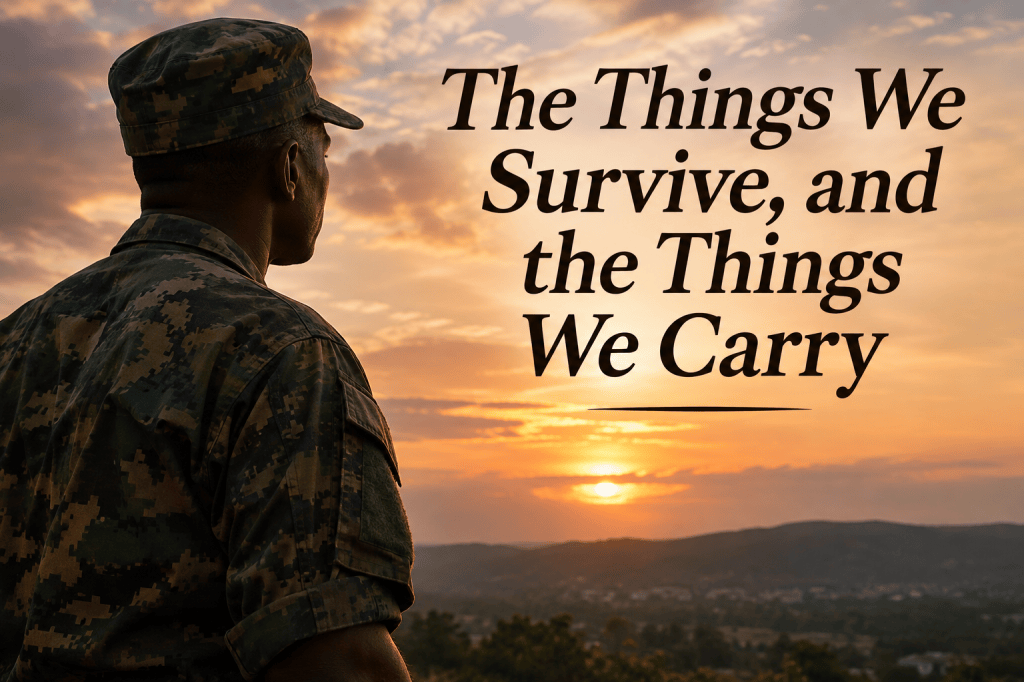
There are some experiences in life that never really leave us.
We may move on, build families, pursue careers, accomplish things we never imagined, and continue living our lives. But somewhere within us, certain memories remain as clear as the day they happened.
I know this because I’ve lived it.
Over the years, I’ve experienced situations in which I came face-to-face with the possibility of death. Some happened before I joined the Jamaica Defence Force, but many of the most frightening occurred during my military service.
And even after all these years, I can still remember them vividly.
The Day I Came Under Fire
One particular experience has remained with me.
We were carrying out routine patrols, conducting random checks in different areas. At one point, we had moved around to another section of the neighborhood near a hospital.
While we were there, we heard multiple gunshots.
We immediately responded, moving toward the sound of the gunfire. We eventually took up positions on higher ground, on the roof of a section of the hospital’s maternity wing that had previously been damaged by fire.
As we tried to determine what was happening, a man came walking along the road.
When we challenged him, he began shouting that he hadn’t done anything wrong. Then he made a statement that struck me as unusual. He questioned why he would do anything when he could see soldiers positioned on the roof.
To this day, I don’t know exactly what he intended by those words.
But shortly afterward, gunfire erupted.
We came under fire, took up defensive positions, and returned fire.
I remember seeing someone carrying what appeared to be an M16 rifle dive into the rubble below. At the time, we thought he had been killed.
But when we subsequently searched the area, he was nowhere to be found.
That was the first time I had personally come under fire.
I had been trained as a soldier. I understood the responsibilities that came with military service. But training and understanding danger are not the same as experiencing someone firing a weapon in your direction.
That day, I was on the wrong side of a muzzle.
And it is a memory I have carried ever since.
The Things We Cannot Unsee
There were other experiences.
I remember one night when we responded to the aftermath of a shooting. A man had been shot, and the person responsible reportedly exchanged gunfire with the police before escaping.
While we were still dealing with that incident, we received another call.
There had been a robbery, and multiple people had lost their lives.
I witnessed the aftermath of those events. I saw people who would never return home to their families.
By the end of that night, I was physically drained.
There are details I don’t feel the need to describe publicly. The point is not to shock anyone with what I witnessed.
The point is that witnessing the violent loss of human life can affect you in ways that are difficult to explain.
And sometimes, long after the incident is over, the memory remains.
When Your Understanding of Life Changes
Those experiences changed the way I look at life.
I learned just how fragile life really is.
A person can be here one moment and gone the next. Sometimes without warning. Sometimes because of circumstances entirely beyond their control.
And sometimes because someone made a careless decision without considering the possible consequences.
Today, I am much more conscious of danger than I once was.
I pay attention to my surroundings. I think carefully about unnecessary risks. I recognize that situations can change in an instant.
And when I see people behaving recklessly, it affects me deeply.
Not because I believe I know everything or because I think I can control what happens in life.
But because I’ve witnessed what can happen when life suddenly takes a tragic turn.
I sometimes wonder whether people recognize the risks they expose themselves and others to when they act without thinking.
I understand that we cannot eliminate every danger. We cannot foresee every circumstance.
But we can exercise wisdom.
We can make responsible decisions.
We can avoid placing ourselves and others in unnecessary danger.
And we can recognize that the gift of life deserves to be treated with care.
Faith Does Not Require Recklessness
One thing I have never lost sight of is my dependence upon God.
My faith in Him did not begin when I entered military service or when I first encountered danger.
I believed in God long before those experiences.
But I can say that living through them strengthened my faith and deepened my dependence upon Him.
There were moments when I recognized that my training, my abilities, and even my best judgment could not guarantee my safety.
I am grateful to God for preserving my life through those circumstances.
But I have also learned that trusting God does not mean abandoning personal responsibility.
Proverbs 22:3 (KJV) tells us:
“A prudent man foreseeth the evil, and hideth himself: but the simple pass on, and are punished.”
That Scripture speaks to something I’ve come to understand through experience.
We can trust God while exercising caution.
We can believe in His protection while making responsible decisions.
And we can acknowledge His sovereignty without deliberately exposing ourselves to unnecessary danger.
There is no wisdom in being reckless simply because we believe God can protect us.
Faith and responsibility are not enemies.
Learning to Value Another Day
As I’ve grown older, I’ve become increasingly grateful for the ordinary days of life.
Another morning.
Another opportunity to speak with someone I love.
Another chance to serve, to encourage someone, or to make a difference.
Things that can easily become routine take on greater meaning when you’ve witnessed how suddenly they can be taken away.
Psalm 90:12 (KJV) says:
“So teach us to number our days, that we may apply our hearts unto wisdom.”
I think about that often.
Numbering our days does not mean living in fear of death. To me, it means recognizing that life is precious and that the time we’ve been given should not be taken for granted.
And while I believe God is sovereign over life and death, I also believe we have a responsibility to exercise wisdom in the choices we make.
We cannot determine everything that will happen tomorrow.
But we can decide how responsibly we will live today.
What I Still Carry
More than four decades have passed since some of those experiences.
I’ve moved forward with my life. I’ve pursued education, built a career, raised a family, served in ministry, and experienced blessings I could not have imagined during those early years.
Yet some memories remain.
They are part of my history.
And although I cannot change what happened, I can recognize how those experiences have influenced the person I’ve become.
They have taught me to value life, to appreciate the people around me, to exercise caution, and to be grateful for another day.
They have also deepened my dependence upon the God I trusted long before I ever wore a military uniform.
I know that not everyone who experiences trauma responds in the same way. Some memories become less painful with time. Some require understanding, support, and healing. And sometimes the effects remain even as life continues.
But I believe there is value in acknowledging what we’ve experienced rather than pretending it never affected us.
We do not have to allow the past to determine everything about our future.
Neither do we have to deny that it has shaped us.
Today, when I wake up, I thank God for another day.
Not because I believe nothing bad can happen.
Not because I think I can avoid every danger.
But because I understand something that experience has taught me:
Life is precious. Life is fragile. And another day is never something I should take for granted.
Some things we survive.
Some things we carry.
And sometimes, what we carry becomes a reminder to live with greater wisdom, deeper gratitude, and stronger dependence upon God.
— James Samuel Tracey


Leave a Reply